


Bird Sightings
14/05/2026 – Breeding activity ramps up
By Greg Lee
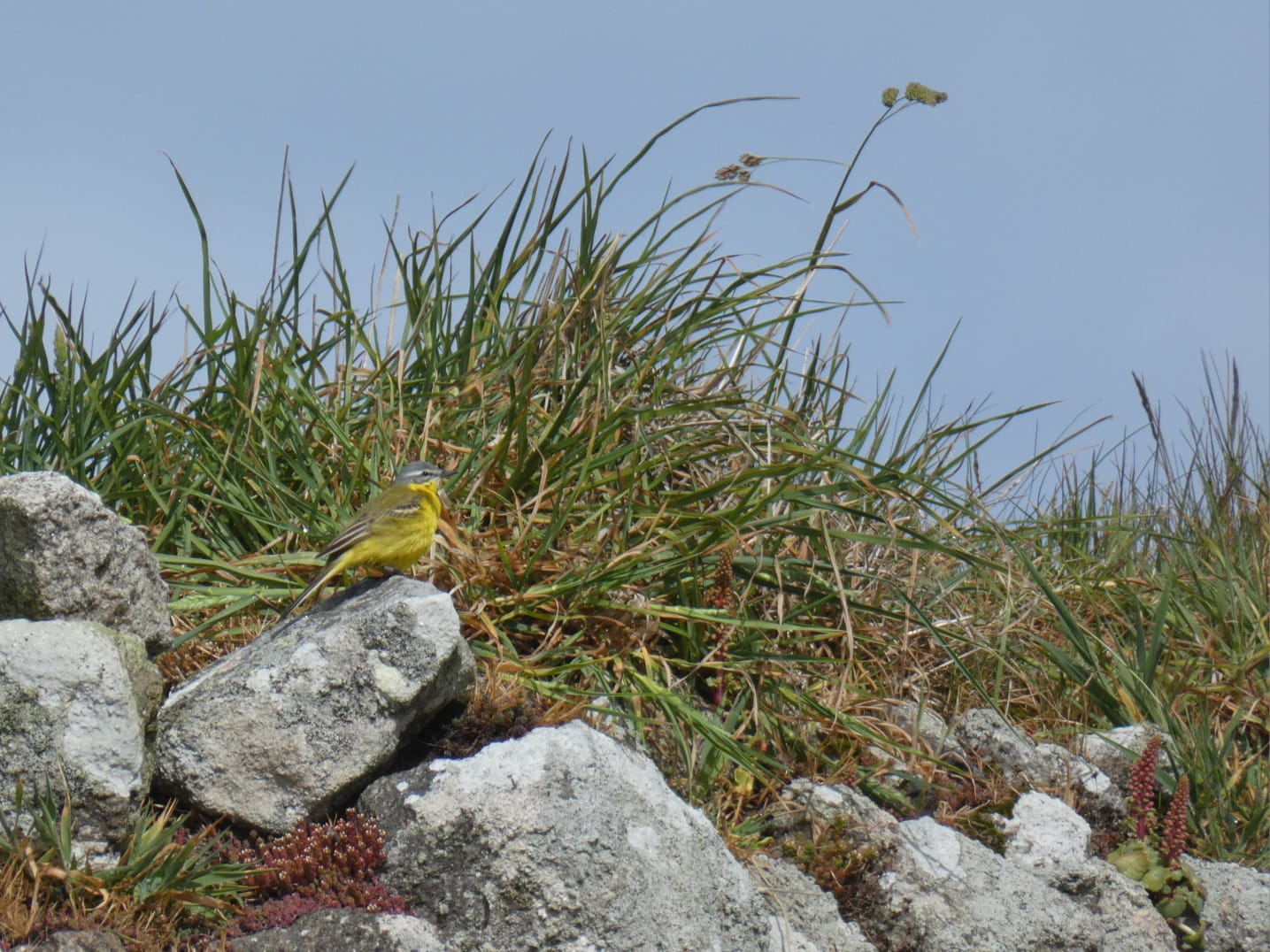
Heavy rain lashing down on our bedroom windows is never the most auspicious start to the day, but the island is definitely thankful for it. Thomas still braved census and managed a couple of late migration highlights including two Redpolls and a Sedge Warbler. Perhaps more exciting were the sightings of the first newly fledged juvenile birds, with a speckly young Blackbird chasing its rather tired looking mother around Millcombe and some very squeaky young Dunnocks sticking to the undergrowth. The male Channel Wagtail was also on his normal perch, we’ve managed to narrow down this bird to three individuals ringed in 2024 of the brood, though we are trying to nail down that last number on his ring.
With the rain still coming through in stages, a bit of office-work was done to keep up to date with census counts and descriptions of some of the interesting bird sightings we’ve collated so far this spring. Once it had passed though, Thomas and I decided to take a look at the sea from the Ugly, where a small stream of auks and Kittiwakes was noted, though nothing seemed to be moving ahead of the intermittent squalls moving up the Bristol Channel. We also checked one of the Swallow nests on the island, where, we noted that the neat cup had been lined with feathers, likely from the six Feral Pigeons currently taking up residence on the island.
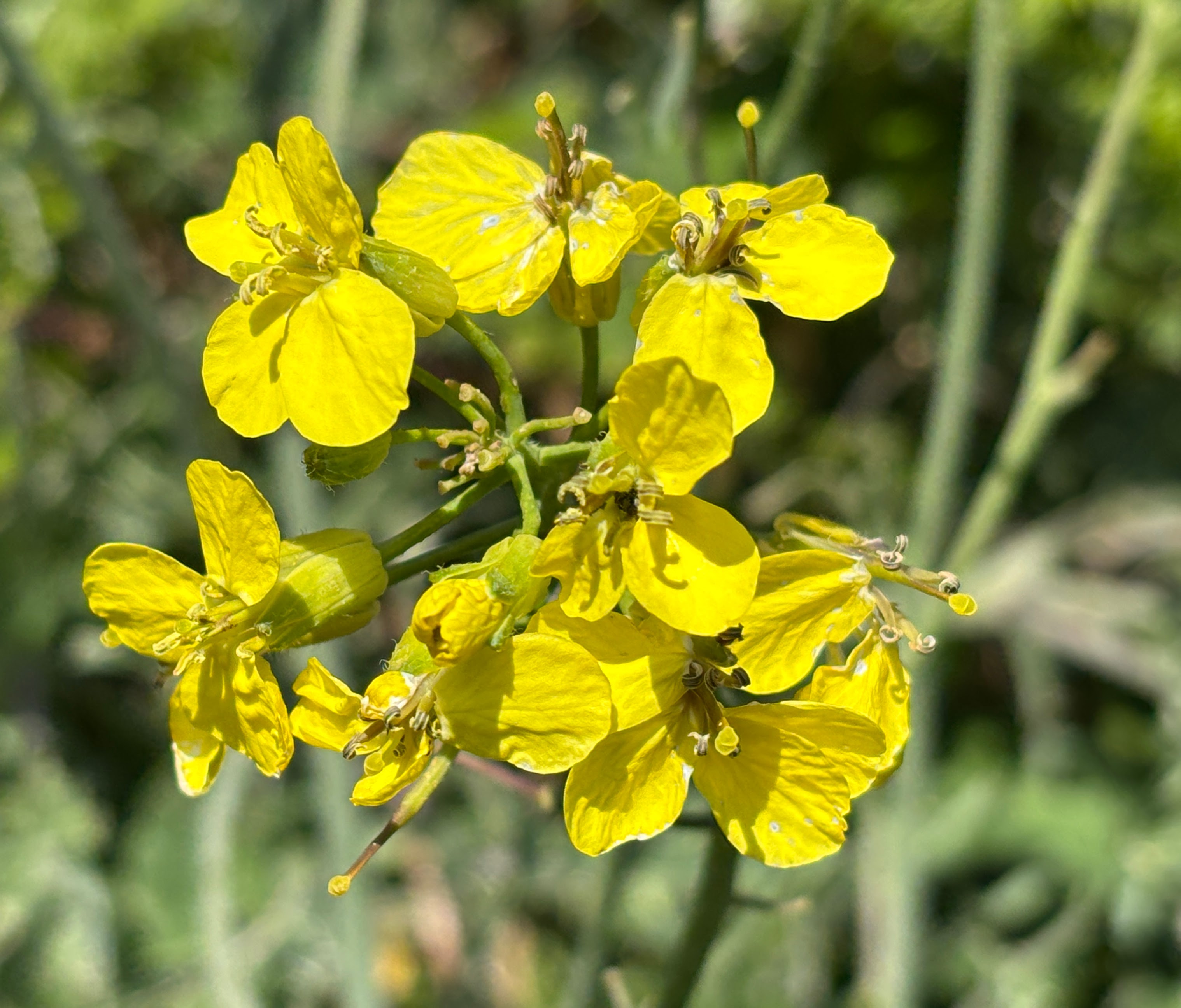 Lundy Cabbage in flower
The final act of the day was heading up to the North End to check on the seabird colonies, notably the Shags, as further up the Irish Sea, Bardsey has been reporting chicks already. Heading down the area, it felt very reminiscent of my season spent on Bardsey last year, with the steep grassy slopes bringing back the excitement of the seabird work I did there, particularly with the pastel-pink Thrift now carpeting certain areas of the cliffs and the distinctive, but not necessarily unpleasant, smell wafting from cliffs of busy seabirds. With multiple Shag nests found, we were pleased to see that some eggs had been laid but also the Gulls had also started laying as well. Over the next month or so, the team will be doing a lot of work with our cliff/colony-nesting seabirds.
13/05/2026 – A Wet Census
By Thomas Weston
Today’s blog is a lot shorter and sweeter. Having lost my camera in Millcombe the other day and not really realising until yesterday, it was great to have found it in lost property in the evening and back with me for today’s census. If you were the person who handed it in, thank you so much!
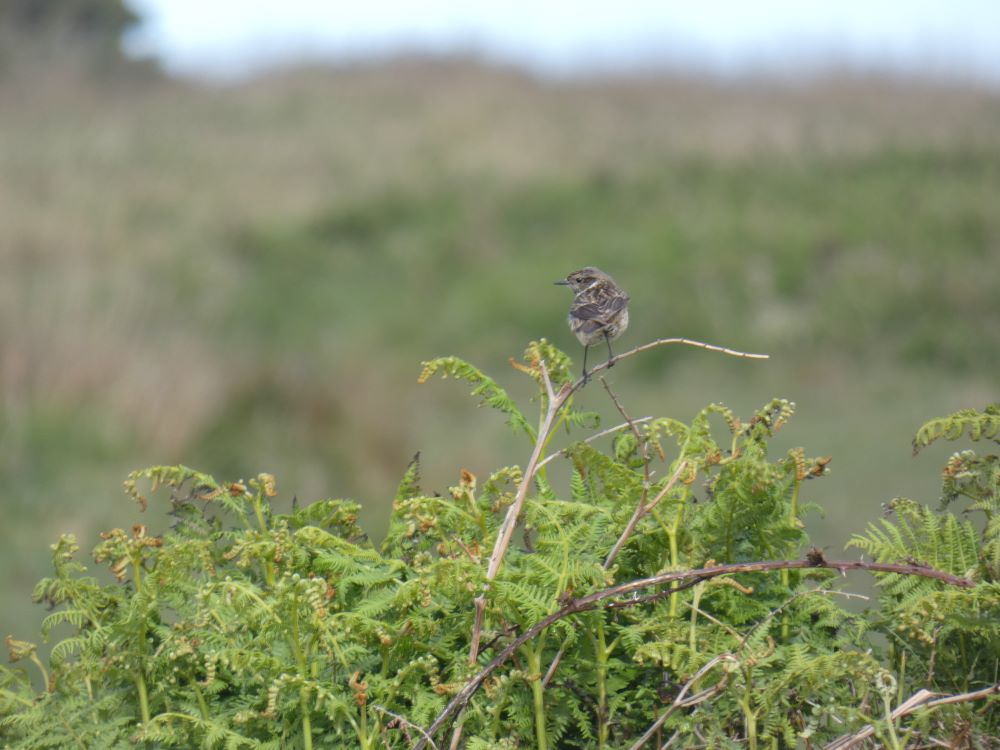 Stonechat on census by Thomas Weston
The weather was lovely and sunny with a nice northernly breeze to begin but this quickly turned into wind, rain and grey cloud throughout, with on and off sunshine up to the end of census. However, to begin, walking through Millcombe yielded the most birds with breeding birds in full voice again – see yesterday’s blog for some of our breeding bird highlights too as they were very much the same today. It is always great to note where the males are singing, as you never know we may get some juveniles from the areas they are singing too! Some nice new breeding evidence came from our Stonechats, surely they are nesting somewhere near to where we spotted this female.
A nice highlight for the morning was the warblers. They have had a mixed year so far. The Chiffchaffs never really had a passage and overall, it has been an incredibly poor spring for them albeit two birds singing in Millcombe was nice. Likewise, Willow Warbler peaked on a single day, but that was it. Numbers for this species have been really concerningly low, although three singing birds on territories is a small win. Moreover, Blackcap, have had a one-day peak so far this year, but other than that where have they been!? One today was a highlight for being how scarce they have been so far. In more positive news, Whitethroat have had a good year so far with a couple of ‘big’ days and today three singing birds in Millcombe was nice to hear, but ideally, we will find some more males on territory.
A personal highlight of census was the seemingly constant passing of seabirds that seems to be happening at the moment, with Manx Shearwaters, Kittiwakes, Gannets, Razorbills, and Guillemots, including some nice feeding flocks and frenzies.
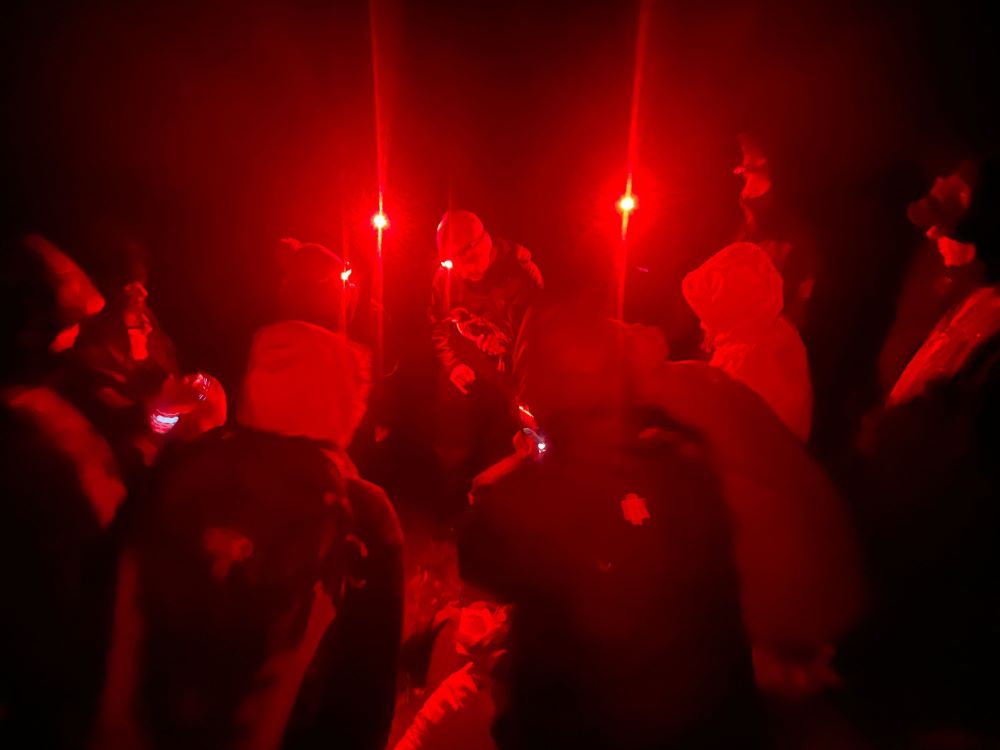 Manx Sheartwater evening by Tara
I got back in good time for my main role of today which was Tavern. However, in true conservation style, after finishing a busy shift that went up to 9pm, the team led a Manx Shearwater evening whereby ~25 visitors joined us for a night on the cliffs. After waiting for it to get fully dark, which included getting soaked by passing squally showers, we ended up showing the public three Manx Shearwaters in the hand. All birds were newly ringed, and biometrics taken before being released, hoping to be seen again in many more years to come! A long and successful day.
12/05/2026 – Conservation Team meetup at 6am!
By Thomas Weston
Today I awoke to calm conditions with a light NW wind throughout the night and morning. The Conservation Team arranged to meet in Millcombe at 6am to open some mist nets and to look through the Moth Trap.
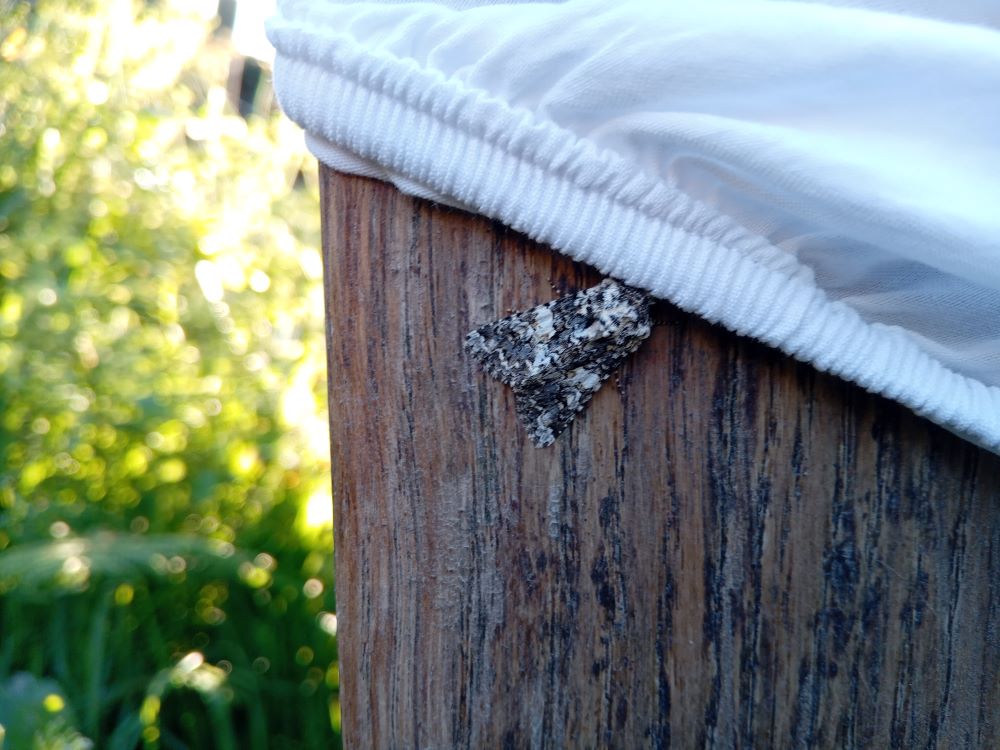 Marbled Coronet in Millcombe Trap Thomas Weston
The bird ringing session was slow, two birds in two hours was not ideal, and we decided to pack up around 8am with just a single Willow Warbler and Sedge Warbler ringed and processed. There was some more excitement in the moth trap with Pale Tussock (new for the year and Tara’s highlight of the day), May Highflyer, Bright-line Brown-eye, Marbled Coronet, Angle Shades, and Agonopterix yeatiana bring some colour and diversity on what was quite a cold night before.
I undertook census and recorded a lot of breeding evidence around the area. This included birds singing on territories such as the Whitethroats, Dunnocks, Robins, Chaffinches, Song Thrush, Blackbirds, Willow Warblers, Chiffchaffs, Wrens, and Skylarks. There were birds in suitable breeding areas including our Meadow Pipits, Oystercatchers, Shags, Linnets, Goldfinches, and Razorbills. There was one species with chicks or in this case ducklings – the Mallard and one species with fledged young, the Ravens. I also recorded the ones ‘just passing’ including our Manx Sherwaters, Kittiwakes, Gannets and a small, but obvious, passage of 6 Sedge Warbler and a single Spotted Flycatcher. In addition, our long staying, almost got the full ring number, returning Channel Wagtail male from two years ago was on show and acting ‘suspect’. We presume he has paired up with his Channel Wagtail sister and they are trying to nest again together for the second year running! She has been seen, but not ring read either so our team will try our best to read the rings soon!
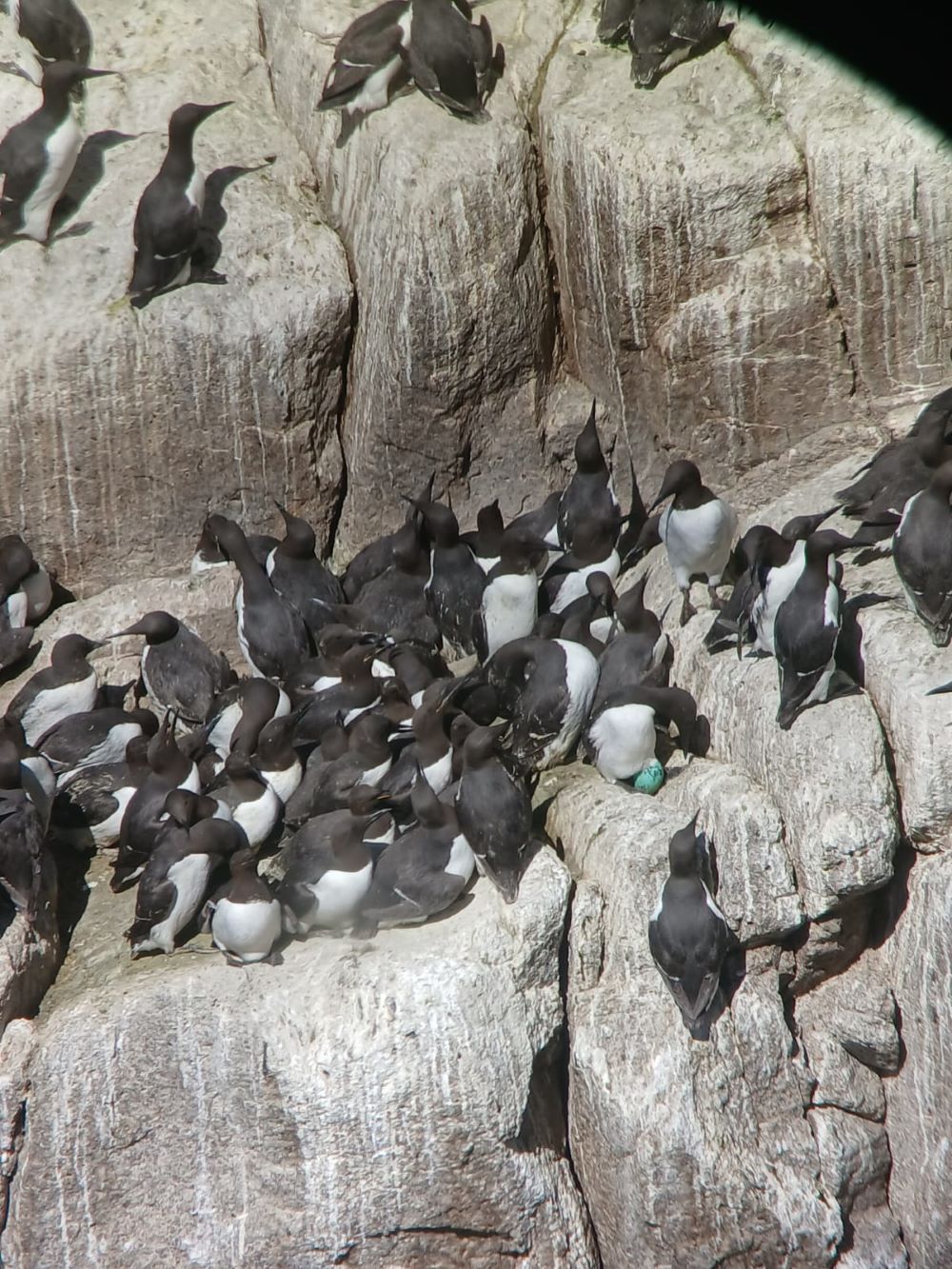 Guillemot egg at the Productivity Site by Emma Abel.
Whilst undertaking census, Bird Obs volunteer assistant warden Greg was on Housekeeping so spent the day going around the properties and making sure they were in tiptop condition. One of the highlights from the day included an abundance of hirundines around the Castle accommodation involving a nice mix of Swallows and House Martins. Before Eleanor’s Tavern Shift, a wander around Millcombe was successful and a charm of Goldfinches in Secret Garden was a nice highlight of the day. Educating the day visitors is always important! Seabird volunteer Emma undertook her seabird productivity surveys after mothing earlier, before undertaking the Seabird Station at Jenny’s Cove. Her personal highlight was seeing the first Guillemot egg of the season on the productivity plot, as well as talking to a range of people all about the amazing seabirds on the island. Bird Obs volunteer Maddie spent some time at the Battery, and saw an impressive 100+ Kittiwakes in two or three big feeding frenzies.
11/05/2026 – Time for some Northerly
By Simon Parker
It's been a while since I posted out some ramblings on here, so it's about time for some updates..
The Island is now in full season mode with three boats arriving a week when the weather behaves, which it hasn't really been doing. This week, the wind switched to a Northerly, bringing the familiar icy warmth that I remember from growing up in't North. It was still fairly peaceful, especially in the landing bay, but there wasn't a lot going on in the bird world. A steady trickle of Swallow were meandering North and some of the Milcombe regulars were out including Willow Warbler, Chiffchaff, Robin, Dunnock and Wren. The landing bay itself was eerily quiet aside from a lone Gannet and a handful of Herring Gull.
A group of Sand Martin were cruising around Benjamins chair above a light scattering of Razorbill, the Northerly wind suddenly made itself felt when I headed up past the old lighthouse, a large group of Herring Gull were crouched in behind the wall sensibly keeping their heads down.
Census finished with a fairly solid count on the Linnet, Skylark and Meadow Pipit, these birds being a significant part of our breeding bird survey. Obvious nesting pairs are now in place across the island and recording that is a significant job. The upside is, we will get some ideas on the health of the local populations and be able to plan our land management around improving areas that suit particular birds.
After Census, I settled into an admin day. Lots of planning for some upcoming media work, stay tuned for that... And some essential inbox T.L.C. Greg managed to get out in the afternoon and spotted yet another Golden Oriole, it's been a good year for these bird so far and they are now an established yearly visitor.
After work, it was a case of heading up the island to keep my training going for the looming Island half marathon in June. The sun was shining by now and the views were pretty spectacular across the North, It definitely didn't feel like May though. 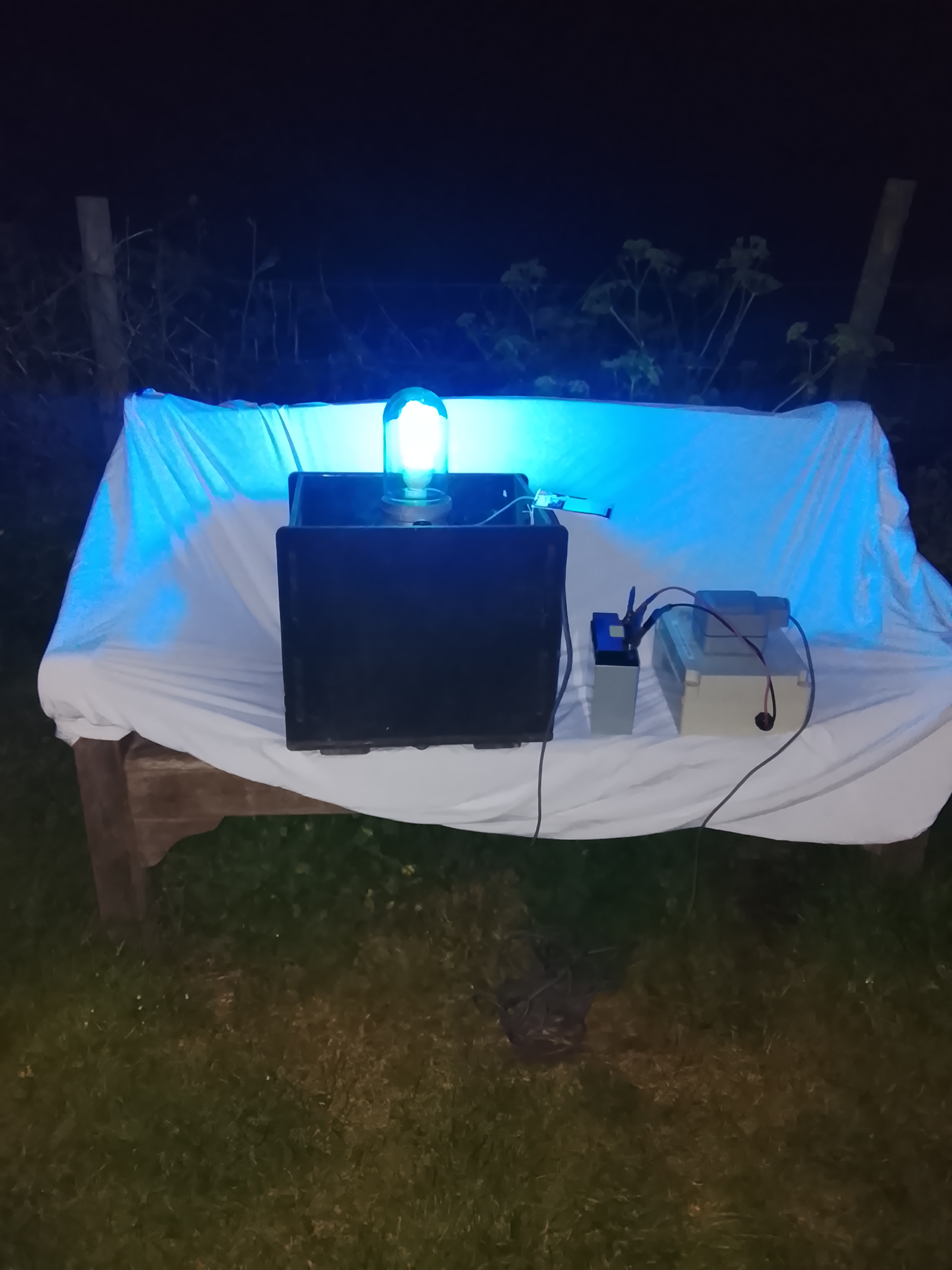
All of that excitement came to an end with the return of the moth trap in Millcombe, moths will be on tour again soon but Millcombe remains a solid site for catching some nocturnal nectar thieves. Check out tomorrows blog for the moth news!